
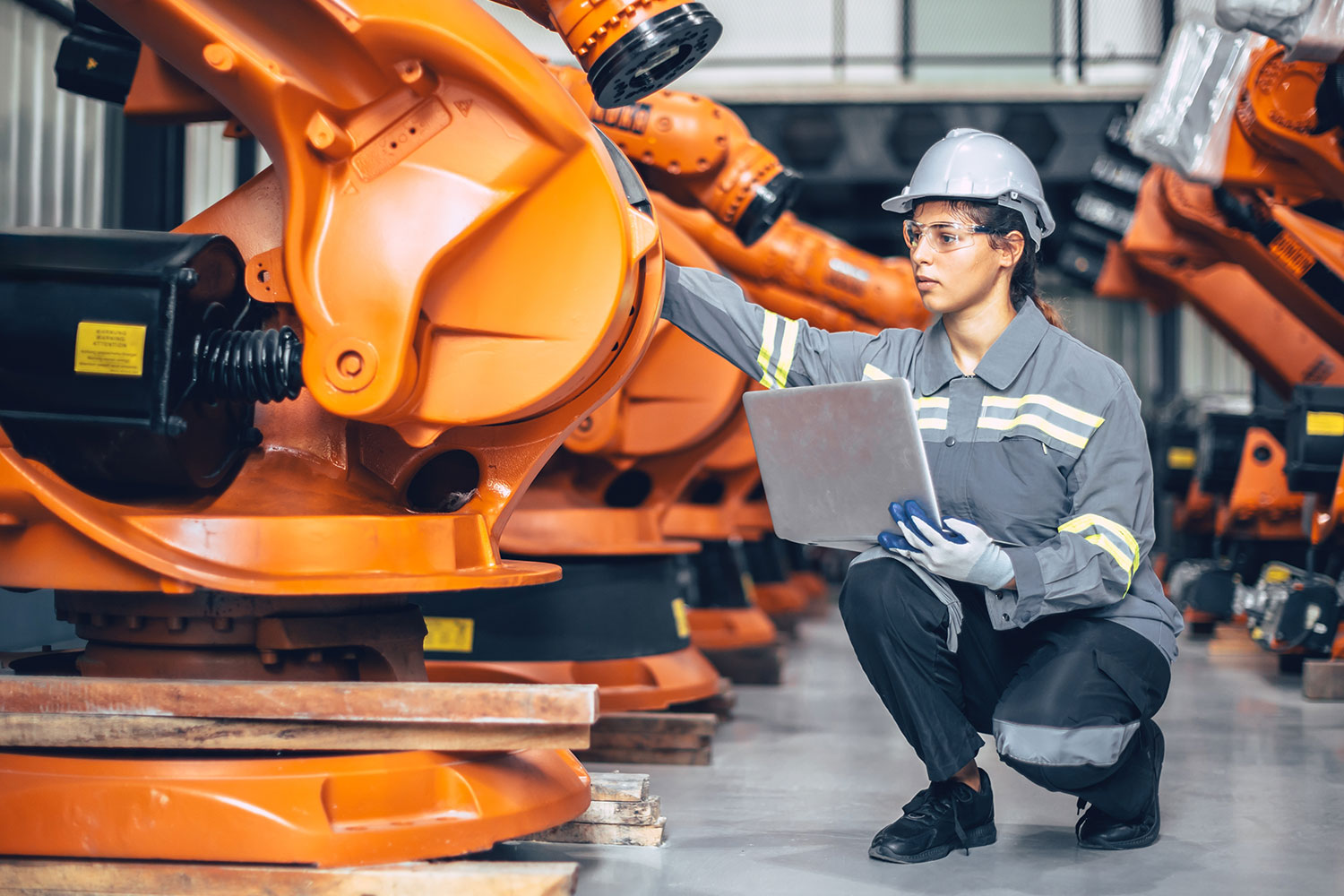
India stands at a defining industrial inflection point. Manufacturing and industrial systems are no longer shaped only by scale, cost, or labour availability. Increasingly, they are defined by intelligence - the ability to sense, decide, and adapt in real time. Artificial Intelligence (AI), when applied thoughtfully to the physical economy, has the potential to reshape how India produces, competes, and creates livelihoods.
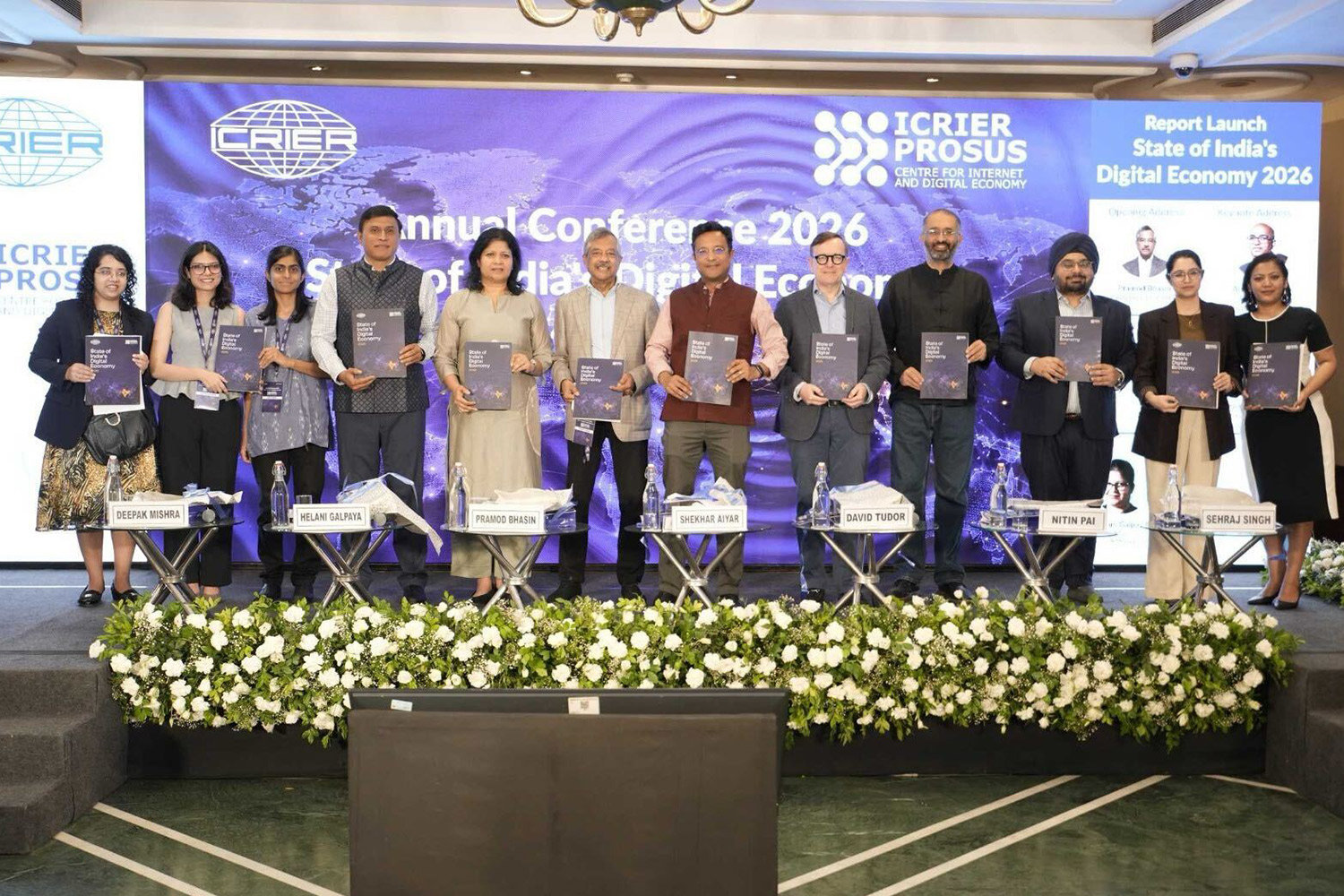
Against this backdrop, Prosus, in collaboration with the Ministry of Electronics and Information Technology (MeitY), Government of India, convened Amrit Udyog: AI for Smart Industries and a Future-Ready Workforce. The roundtable examined how AI is beginning to rewire India’s industrial ecosystem, as intelligence moves from dashboards to factory floors, and from experimentation to execution.
Co-chaired by Mr. Rentala Chandrashekhar, Chairman, Centre for the Digital Future and former Secretary to the Government of India (IT & Telecom), alongside Mr. Tejpreet Singh Chopra, Chairman and Managing Director, Bharat Light & Power Group and former President & CEO of GE in India, Sri Lanka and Bangladesh, the discussion brought together leaders from large enterprises, MSMEs, and industrial platforms. Across perspectives, a common theme emerged: AI is increasingly acting as connective infrastructure - linking data to decisions, machines to people, and productivity to purpose.
For decades, India’s technology narrative has been dominated by software and services. Yet manufacturing has always been one of the world’s largest generators of data. As highlighted during the discussion, industry is now the third-largest producer of data globally, but estimates suggest that less than 2% of this data is actively analysed or used for decision-making.
Advances in sensors, cloud infrastructure, edge computing, and AI models are changing this equation. What was once fragmented and inaccessible is becoming actionable. Dilip Sawhney, Managing Director, Rockwell Automation India, noted that the opportunity lies not in creating more data, but in harnessing what already exists - unlocking visibility, predictability, and control across industrial operations.
This shift is particularly consequential for India, where industrial complexity is rising faster than traditional systems can manage. From unpredictable downtime and quality variation to energy efficiency and regulatory compliance, manufacturers face challenges that demand intelligence at speed. AI offers a way to navigate this complexity - not by replacing human judgement, but by augmenting it with foresight.
Competitiveness, too, is being redefined. In an environment of excess global capacity and price pressure, differentiation no longer comes from cost alone. It increasingly depends on reliability, sustainability, traceability, and responsiveness. Smart industries are those that can optimise continuously, prove quality, and adapt faster than the market.
India’s industrial backbone lies in its micro, small, and medium enterprises (MSMEs). As Tejpreet Singh Chopra underscored, India has over 60 million MSMEs that employ over 230 million people, contributing roughly 30% of GDP, and accounting for nearly half of exports. Their scale makes them central to India’s growth ambitions – as well as the challenge of AI adoption.
MSMEs face structural barriers: limited capital, fragmented data, and uncertainty around returns. What is changing, however, is accessibility. AI tools are becoming more modular, easier to deploy, and increasingly consumption-based, lowering the threshold for experimentation. As Santhoshi Buddhiraju, CEO of Autocracy Machinery, said: “AI doesn’t replace jobs - it replaces inefficiency. MSMEs that use AI will replace MSMEs that don’t.”
At the roundtable, participants returned repeatedly to a critical insight: the risk for India’s MSME ecosystem is not adopting AI too early - it is adopting it too late.
Adoption challenges persist, not because AI lacks relevance, but because prevailing pathways are often misaligned with MSME realities. For many small businesses, AI still appears expensive, opaque, and risky. Concerns around data control, intellectual property, and long-term dependence on large global platforms frequently outweigh perceived benefits.
This prompted discussion on the need for shared AI access models. A government-facilitated or public–private AI marketplace could offer common capabilities, sector-specific tools, and standardised data frameworks as shared resources. Such an approach would allow MSMEs to experiment and scale without heavy upfront investment or fear of lock-in.
The role of government here is not as an operator, but as a neutral steward - creating trust, ensuring interoperability, and establishing guardrails around fair access and data protection. Much like India’s digital public infrastructure enabled scale without exclusion, a shared AI layer could democratise advanced capabilities for industry.
Seen through this lens, AI adoption becomes less about technology acquisition and more about ecosystem design - balancing scale with sovereignty, and innovation with inclusion.
Global manufacturing experience also highlights the importance of designing processes with intelligence in mind from the outset. Retrofitting automation into legacy workflows often leads to fragmented outcomes. In contrast, end-to-end design - where data, robotics, and AI are integrated across the value chain - delivers stronger economics and resilience. Naveen Kamat, Chief Digital and AI Officer at Larsen & Toubro, observed that when intelligence is engineered into processes rather than added later, productivity and outcomes shift fundamentally.
Use cases such as predictive maintenance, vision-based quality inspection, and digital traceability are no longer experimental. They are becoming foundational, particularly as export markets demand proof of provenance, sustainability, and compliance. In this context, intelligence becomes a passport - enabling Indian manufacturers to participate more deeply in global value chains.
No discussion on AI in industry is complete without addressing employment. Automation will reshape roles; some tasks will disappear, others will evolve. The consensus was clear: the challenge is not a shortage of people, but a shortage of skills. As Bhuwan Lodha, CEO – AI Division, Mahindra Group, noted, the priority is not training people in AI, but training them for how work itself is changing.
Manufacturing remains one of India’s strongest levers for inclusive job creation, particularly as new value chains emerge in clean energy, advanced materials, and data-driven operations. The imperative is adaptability — building a workforce that can learn continuously and move with technology rather than be displaced by it.
Technology alone cannot deliver this transformation. Policy consistency, shared digital frameworks, and ecosystem-level collaboration are essential. Standardised data architectures, trusted platforms, and industry–academia partnerships can significantly accelerate adoption, especially for smaller enterprises.
Sehraj Singh, Managing Director, Prosus India, reflected: “India has a unique opportunity to embed intelligence into its industrial growth story from the ground up. If we align technology with skills, policy, and enterprise ambition, AI can become a force multiplier - not just for productivity, but for building resilient industries and meaningful livelihoods at scale.”
The path to smart industries and a future-ready workforce is not linear. But with thoughtful collaboration and long-term vision, it is well within reach.