

Learnings from scaling e-bikes in last-mile deliveries
At the Prosus AGM two weeks ago, we repeated last year’s results on our group commitment to scale zero-emission deliveries. We grew our total fleet of electric vehicles by 36%—surpassing our 20% target—a result largely driven by Brazilian food delivery platform iFood and Takealot’s efforts in South Africa.
We reported solid growth, but what does it actually take to deliver on these targets? What elements need to fall into place to trigger a genuine shift toward green vehicle usage? On World EV Day 2026, I want to explore a few learnings from countries where our portfolio companies are actively integrating e-bicycles (e-bikes) into the operational reality of last-mile food delivery.
The theory
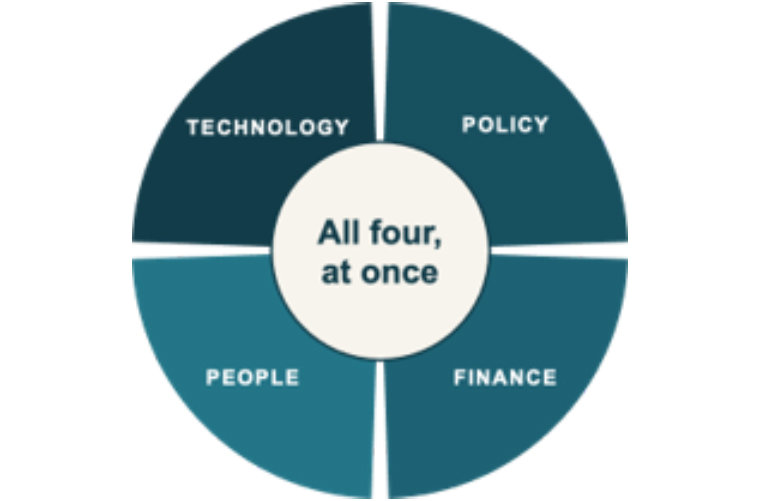
Transitioning a logistics system from combustion to electric vehicles requires four elements to align seamlessly: technology, policy, finance, and people.
- Technology spans battery performance, charging infrastructure availability, but also design for durability—like whether a wheel can survive the road surfaces it rides on daily.
- Policy ranges from municipal rules dictating inner-city vehicle access, to national import duties on EV components, to government requirements for local assembly plants.
- Finance covers large-scale capital flows funding vehicle production, all the way down to consumer financing models—like rentals or leases—that enable a courier to afford an EV for work.
- People encompasses the delivery partner's physical experience in the saddle, but also whether the surrounding culture makes them actually want an e-bike in the first place.
My biggest takeaway? Getting three out of four right doesn't give you a scaled fleet. It gives you a pilot.
Abundant technology
Before comparing specific countries, it helps to ground this in a broader perspective on technology. Earlier this year, I spent time with electric two-wheeler manufacturers in China to better understand global supply. I was struck by one immediate realization: electric two-wheeler technology is abundant.
Whether it is off-road motorbikes, urban scooters, cargo bikes for camping, or motorized rolling suitcases—if you can dream up an electric motor on a two-wheeled frame, someone has probably built it. Yet very little of that supply is built for commercial delivery. Most bikes are engineered for a 15-kilometer daily commute, not for logging 100 kilometers in the rain over potholed roads while racing the clock. Technology itself isn't the bottleneck. Securing fit-for-purpose technology at an affordable price is.
Three countries, three pathways, one vehicle
When comparing e-bike adoption across Brazil, South Africa, and the Netherlands, you quickly see where these four dynamics click—and where they stall.
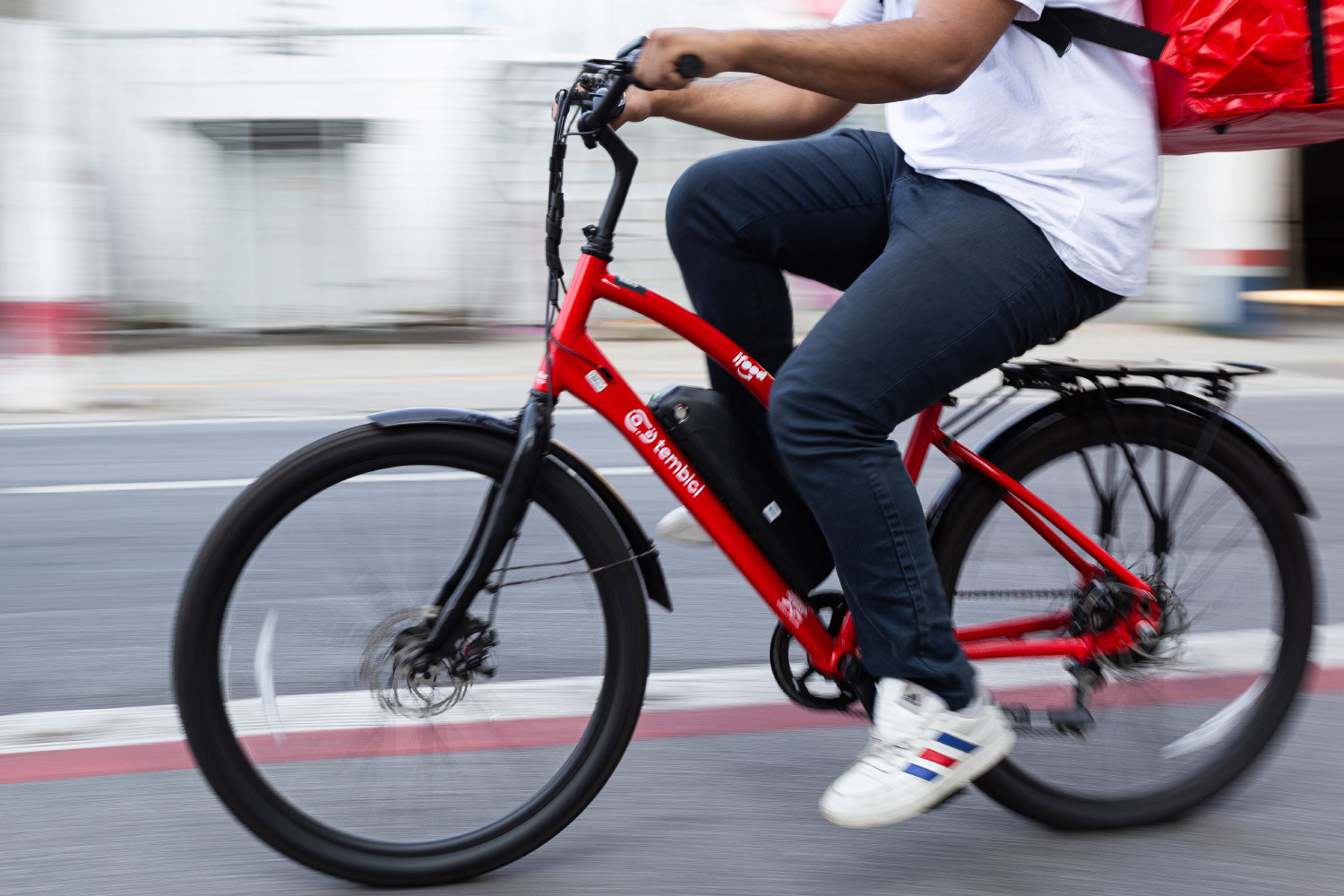
Brazil: where it’s working. iFood’s e-bike program has scaled from just 96 bikes in early 2024 to roughly 5,000 today because all four elements are in sync. The finance model works: e-bikes are available via weekly rentals backed by strong commitments from iFood, and the capital needs are reinforced by Brazilian development bank BNDES approving R$340 million this past June for iFood’s partner, Tembici. Policy incentivizes local assembly. Technology is genuinely tailored to the task; years of joint testing by Tembici and iFood yielded a durable, cost-effective bike built for commercial delivery. Finally, couriers receive targeted support, iFood assigns shorter routes with AI , and dedicated tech hubs for quick repairs.
South Africa: where it hasn't clicked yet. Takealot is working hard to introduce e-bikes, but candidly, it isn't clicking yet. This isn't for a lack of effort—first movers in this space, like Greenriders, spent serious capital and time refining tech, training riders, and building a cycling culture. However, the hardware remains too expensive (impacting negatively the net earning of drivers), the driver experience isn't seamless and supportive policy is lacking. E-bikes have the barrier of a driving licence removed, which is a strong pluspoint in a country with high youth unemployment rates, but still the numbers don’t add up. Compounded by a historically weak two-wheel culture, progress remains stalled. Solvable in isolation, these friction points currently reinforce one another.
The Netherlands: where it's already normal. Just Eat Takeaway operates a large e-bike fleet across dense Dutch urban centers. Here, compact cities, short routes, dedicated cycling infrastructure, and a cultural default toward biking meant all four pillars were in place long before anyone assembled an electric vehicle. The transition wasn't an uphill battle because the environment was already built for it.
Scaling e-bikes into other European countries is another ball park. For instance, in Spain the cultural aspect of not wanting to ride a bicycle but a high speed scooter, a strong reason why e-bikes have not scaled as fast.
Focusing efforts
This comparison reveals exactly where to focus our energy. In Brazil, the priority is to keep driving down unit economics so the transition becomes inevitable. In South Africa, the core constraint isn't the bike itself—it is the cost structure and the culture.
I conclude with a simple observation. Let’s stop asking if electric delivery works, and start identifying which of the four pillars is missing—and then rolling up our sleeves to fix it.
Article by Gerald Naber, Global Lead Environmental Sustainability, Prosus