
By Euro Beinat, Global Head of AI at Prosus
Thirty thousand agents. It’s not a vision for the future or an abstract goal; it’s the number of AI agents we’re building across Prosus by the end of March. Right now, we've already built over 26,000, and counting. Each agent is far more than a chatbot; it’s a tangible tool, built by employees, to streamline workflow and drive impact.
After 18 months on this journey, we’ve gathered our insights into building an agentic workforce – a bottom-up initiative that blends technology, culture, and process transformation. Here's what we've learned along the way.
Beyond assistants: Agents that actually get the work done
Traditional AI assistants are good at offering suggestions, but AI agents go a step further by completing work autonomously. This is a game-changer for operational efficiency. These agents are designed to fulfill specific jobs-to-be-done, automating complex workflows seamlessly.
Picture this workflow from iFood, one of our portfolio companies in Brazil. A restaurant partner contacts their account manager about a sales dip they observed the previous week. Traditionally, the account manager might liaise with a data analyst, who crunches the numbers and comes back with some basic data insights – all of which takes time and coordination. Now, the account manager turns to an AI agent – a senior AI account manager agent – which automates everything from identifying the right data to look at, processing that data, analysing the data and returning the answer and insights directly back to the account manager, all in moments.
This coordinated interaction exemplifies our vision: employees and specialised tools collaborating to achieve specific goals more efficiently.
The inflection point: Overcoming perceived barriers
When we launched our agent-building tools in December 2024, we focused on lowering the barrier for everyone to create agents for themselves, to improve productivity and independence, but also to remove bottlenecks. Yet, adoption was slower than expected. While we added all the tools and integrations that our colleagues required, usage grew slowly until mid 2025. Why? Because most of our non-technical colleagues thought that building "AI agents" was something that engineers do, certainly not lawyers or accountants.
This was a lesson in culture over technology. We shifted our approach by embedding ourselves (the AI team) into teams across communications, HR, sales, finance and legal. Instead of abstract workshops, we conducted hands-on sessions: "Here’s your workflow – let’s build an agent that automates part of it together" and in a matter of hours teams would go from hesitation to ambassadors, championing the various applications of agents in their workflows. As a result, associates across Prosus have started creating and sharing agents, with adoption reaching every corner of the organisation. It is probably fair to say that everyone at Prosus is now capable of building an agent that improves how they work.
The primary barriers here were psychological, not technical. However, once teams saw how simple it was to apply basic agents to their daily work, adoption soared, and the momentum became self-sustaining.
As a lifelong technologist, one of my biggest learnings over time is that building an agentic workforce - AI in general - is not primarily a technical challenge. It’s an organisational and cultural transformation:
- Experimentation is essential. The first agent you build might not work perfectly, but iteration is key.
- You don’t need a tech background. When legal teams start coding, or engineers draft contracts before consulting legal, it signals an organisational shift.
- Bottom-up adoption works best. Empower employees with tools and guardrails, but let them drive experimentation organically.
- Tie application to incentives. We’ve linked agent creation to performance reviews and bonuses, ensuring everyone has skin in the game.
Three agents in action
Here are three concrete examples of agents that are already transforming workflows at Prosus:
- Restaurant Account Executive Agent:
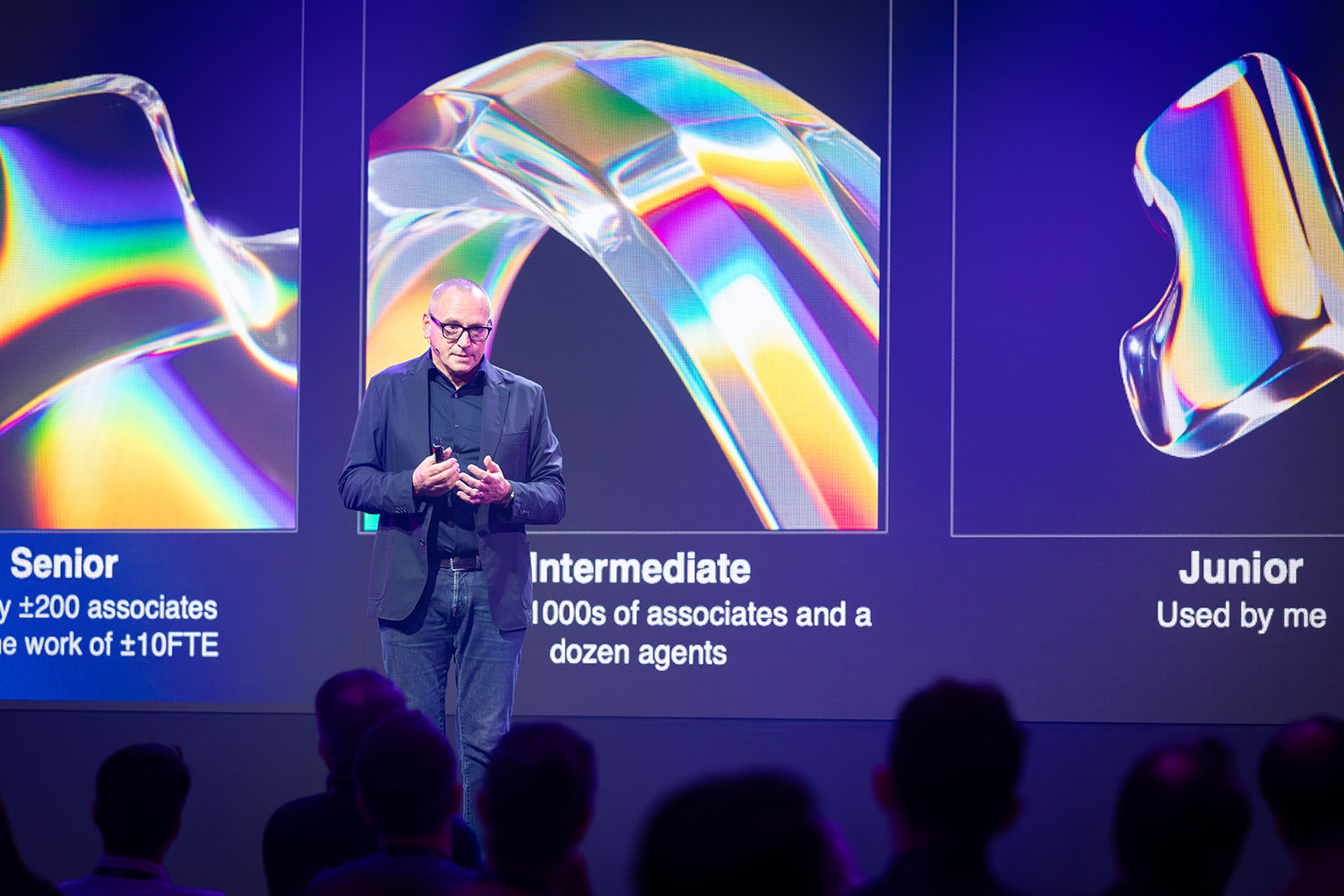
Used daily by over 200 associates at iFood, this senior agent automates restaurant performance reporting, helping account managers prepare for meetings with our restaurant partners. It performs the manual work equivalent to 40 full-time employees (FTEs), freeing teams to focus on what matters most. - Data Analyst Agent:
An intermediate agent enabling any employee to query data in natural language—no technical expertise required. Thousands of associates rely on this agent, as do other AI agents that need access to data insights. - Newsletter Wizard Agent:
A junior agent I personally use to curate AI industry updates every weekend. While it only serves me, it exemplifies the democratisation of automation – every employee can create tools personalised to their needs.
The impact: Creating 1,000 FTEs in capacity
So, how has this impacted our teams and the work that we do? In the simplest possible terms, we’ve created the equivalent of 1,000 full-time employees across the group, unlocking major organisational capacity. These agents have scaled efficiency, shifted employee focus toward high-value tasks, and fostered a culture of innovation.
While time saved is at best a very partial measure of success, it’s undeniable that this milestone reflects the real value of empowering people with scalable, specialised tools.
From hesitancy to exponential adoption, this journey has reshaped our organisation. As we continue building toward 30,000 AI agents, one thing is clear: the future of work isn’t just about technology. It’s about people embracing change, collaborating across teams, and unlocking new possibilities through innovation.