
Dive into our worlds - Floris Fok
Ten years ago, it was just me, a laptop, and a YouTube tutorial on classifying cats and dogs.
I didn’t know it then, but that curiosity would eventually take me to a very different room: standing in front of our CEO, explaining how to train Large Language Models (LLM).
If you’d told me that back then, I wouldn’t have believed you.
Not because it sounded impressive.
Because it sounded impossible.
But looking back, the path wasn’t random. Each step just pulled me a little further in.
The moment everything clicked
My journey into AI didn’t start with ambition. It started with disbelief.
During my biomedical engineering bachelor’s, a professor showed how machine learning could solve in hours what had taken years with traditional methods.
We rebuilt it in a few lessons.
That was the moment. Not gradual—instant.
I didn’t fully understand it, but I knew I wanted to be closer to it.
So I went looking for anything related to machine learning and found one thesis topic: a PhD-level project on transfer learning.
I signed up.
“I’m really good at Python,” I said.
I wasn’t. I hadn’t written a single line.
But by then, I’d already committed, so I had to figure it out.
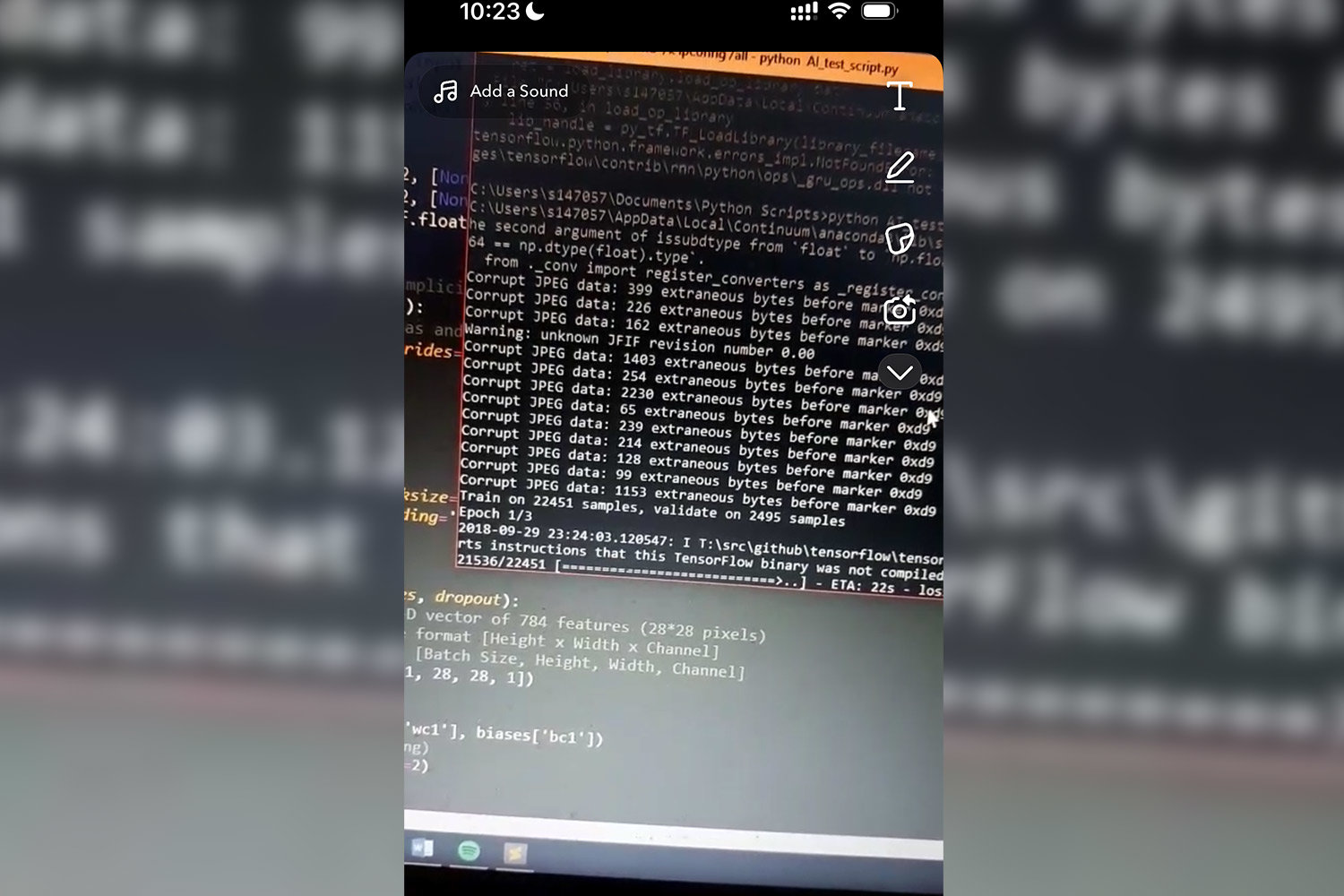
I bought a PC with GPU, spent nights watching YouTube tutorials, trained my first models on random Kaggle datasets, cats vs dogs, mostly, and broke things more often than I got them working.
Most of the time, I wasn’t even sure I was doing it right.
But that didn’t really matter.
Once you take ownership, learning stops being optional, it becomes inevitable.
From learning to building
That experience changed how I approached everything that came after.
Instead of waiting to feel ready, I started moving toward problems and figuring things out along the way.
Sometimes that led to things that worked.
Sometimes… less so.
At one point, I got into building trading algorithms. It turned into the most expensive hobby I’ve ever had. I learned a lot about spreads, mostly by losing money.
But even that followed the same pattern: if something looked like “the future,” I wanted to understand it by doing it.
Over time, the problems got bigger. And the environments more complex.
That’s what eventually brought me to Prosus.
A laboratory and a playground
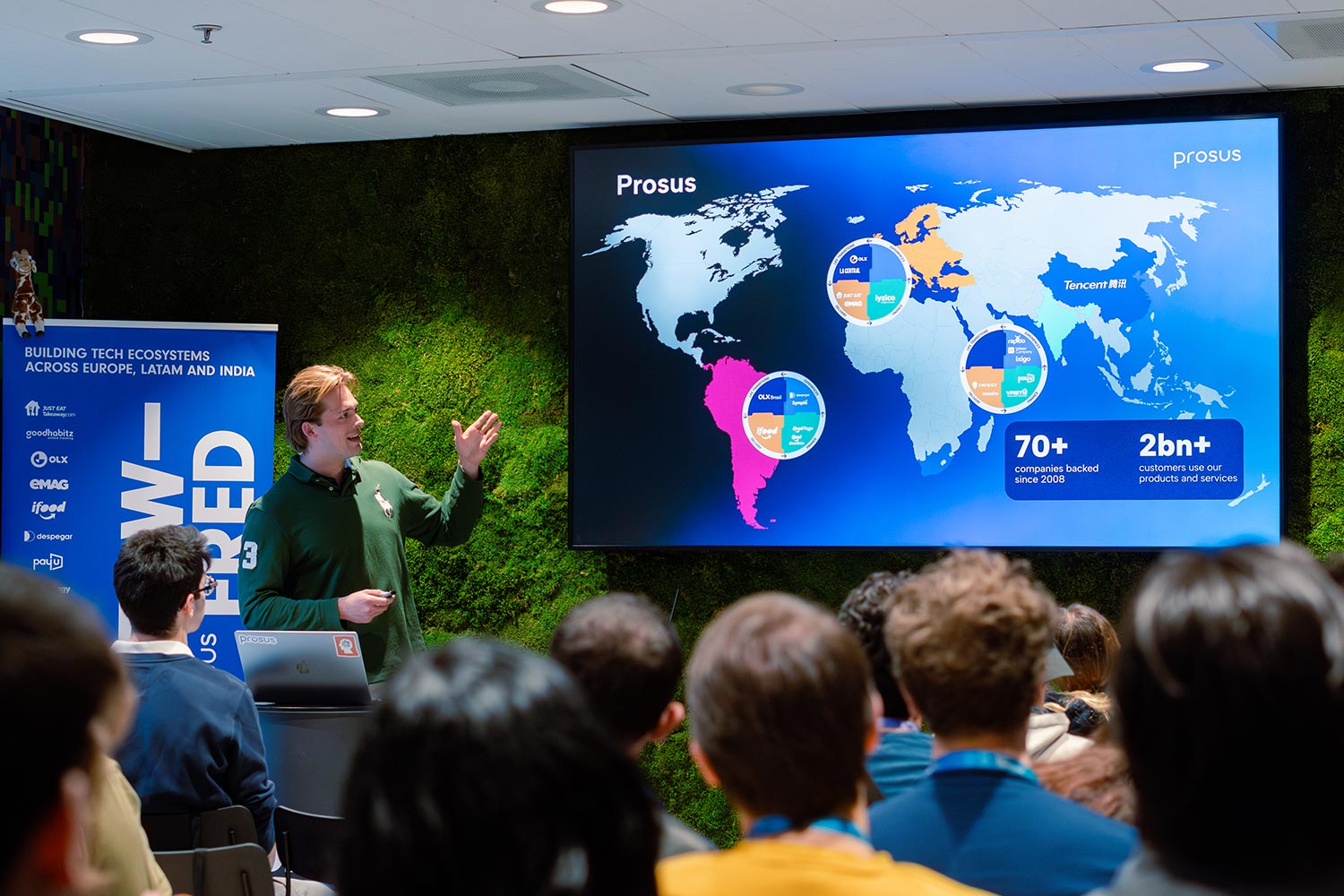
At Prosus, I work as an AI engineer across a global ecosystem of companies.
What makes it different isn’t just the scale, it’s the exposure.
You’re constantly moving between industries, teams, and challenges. What you learn in one place quickly becomes useful somewhere else.
And the learning keeps coming, since ideas make it outside the tutorial or fabricated example.
Because the work is real. The systems operate at scale. And the outcomes matter.
And unlike traditional consultancy, we don’t step in and leave.
We stay.
If something breaks months later, we’re still involved.
If something works, we help it grow.
You don’t just build things, you see what happens when they meet reality.
When ideas start to scale
As the scope of the work grows, something else changes too.
You stop thinking in terms of single solutions and start thinking in terms of systems.
A good idea doesn’t stay in one place. It moves.
One of the projects using LLMs for personalisation literally traveled the world. Since we saw it worked, then we have the reach to make that idea cross borders. And the best part, we were the first to do it.
One experiment became multiple applications.
That’s when you start to see the real leverage of working in an ecosystem:
- learning compounds
- solutions travel
- progress accelerates
How the work evolves
As the problems scale, the way you work has to evolve with them.
What started as learning and experimenting becomes a cycle:
- Make it work
- Make it better
- Make it scale
Then repeat for the next problem.
Over time, that cycle takes you across very different domains, but the approach stays the same.
Why generalists are winning again
When you’re constantly moving between problems, you stop thinking in terms of one skill.
You start connecting things.
With AI lowering the barrier to execution, you don’t need to be perfect at one thing. You need to be able to move between things.
That’s where the leverage is now:
- connecting ideas
- orchestrating systems
- testing quickly
Staying grounded
Working this close to new technology also means constant noise.
New tools, new models, new claims, everything promising to change everything.
The only thing that’s consistently worked for me is simple:
Compare everything to your current baseline.
Not “is this interesting?”
But “is this actually (significantly) better than what we already do?”
It sounds obvious, but it’s surprisingly easy to forget.
The mindset shift
At some point, you realize something else has changed.
You’re no longer just learning.
You’re the person closest to the problem.
And that comes with responsibility.
If you’ve spent time understanding something: Testing it, breaking it, improving it..You already know more about it than most people in the room.
It just takes a while to trust that.
I still have moments where things feel almost too easy, and I catch myself thinking, this can’t actually be that valuable.
But that’s usually a sign you’ve just spent enough time on it.
Expertise isn’t defined by title, it’s defined by ownership.

Why I chose Prosus
Looking back, the moments that shaped me most all have something in common.
They were uncomfortable.
Moments where I didn’t fully know what I was doing yet.
Where the problems were bigger than what I had done before.
Where I had to grow into the role.
And that’s exactly what Prosus keeps offering.
As the systems get more complex, the challenges don’t disappear, they evolve.
And so do you.
What this means for you
If I trace the path from those YouTube tutorials to where I am now, it wasn’t one big leap.
It was a series of small steps:
- getting curious
- stepping into things I wasn’t ready for
- taking ownership
- and figuring it out along the way
That’s what this environment enables.
Not a predefined path, but the space to build one.
If you join, you won’t be handed clarity from day one. You’ll have to try things, ask questions, get things wrong, and try again.
But you won’t be doing it alone.
You’ll be surrounded by people who are just as curious and just as willing to figure things out and move FAST.
The worst thing that could happen is that you didn't try.
Explore opportunities at Prosus: https://jobs.ashbyhq.com/prosus